Wedding seating plan: Romanian etiquette, table sizes and mistakes
How to plan your wedding seating step by step: the prezidiu or a sweetheart table, where the nași and parents sit, table sizes, the children's table and common mistakes.
- Finalise the seating plan after your RSVP deadline, usually two to three weeks before the wedding, and send it to the venue one to two weeks before.
- A 180 cm round table seats 8-10 guests comfortably; twelve is cramped.
- The nași (Romanian wedding godparents) sit closest to the couple, with parents and grandparents at the front tables.
- Every guest should know at least two people at their table, and couples always sit together.
- Sort the entrance board alphabetically by surname, not by table, to avoid a queue at the door.
Make your wedding seating plan once your final RSVPs are in, usually two to three weeks before the day. Start with the couple's table and the nași (the Romanian wedding godparents), place parents and grandparents close by, then group everyone else by family and friendship circle, about 8-10 people per 180 cm round table, with one or two spare seats.
That is the short version. The longer one involves an aunt who is not speaking to her sister-in-law, colleagues who know nobody, and a hora that pulls the whole room onto the dance floor. Here is the method we use for the weddings we help plan, with the Romanian customs explained for anyone marrying into them.
The top table: a Romanian prezidiu or a sweetheart table
Decide this first, because it shapes the rest of the room.
The prezidiu is the traditional long top table at the front of the room, facing the guests. Unlike a Western top table, which seats the couple and the wedding party, a Romanian prezidiu almost always includes the nași: the married couple (or couples) who act as the bride and groom's sponsors at the church wedding and remain their spiritual mentors. Parents sometimes sit there too. The upside: everyone sees you, the photographer has the shot, the nași are honoured. The downside: you sit in a single row and only talk to your immediate neighbours.
A sweetheart table for just the two of you is increasingly common. The nași then get their own round table, the one nearest to you, often with their families. It suits couples with two or three pairs of nași who do not want a twelve-metre prezidiu.
A third option: a large round couple's table with you, the nași and your closest friends, sometimes placed right in the middle of the room.
Ask your nași rather than assume. Some value their seat at the prezidiu; others are delighted to sit with their own family and friends.
Who sits closest: nași, parents, grandparents
Romanian weddings follow an unwritten order:
- The nași sit closest to the couple: at the prezidiu beside you (traditionally the godfather next to the groom and the godmother next to the bride) or at the nearest table.
- Parents take the front tables, usually one per family, with siblings and grandparents. If the families get on well, a shared parents' table is a lovely gesture.
- Grandparents deserve good seats, but not next to the speakers. Close to the couple, away from the band, with easy access to the toilets and the exit.
- Close relatives come next, then extended family, friends and colleagues.
If you are combining the wedding with your child's baptism on the same day, the baby's godparents also get a place of honour. We cover that in our guide to a wedding and baptism on the same day.
Round or long tables: how many seats each
The room decides, not Pinterest. Ask the venue for a floor plan with measurements and for the tables they actually own: in Romania you usually choose from the venue's stock rather than a rental catalogue.
| Table | Size | Comfortable | Maximum (tight) |
|---|---|---|---|
| Small round | 120 cm (4 ft) | 4-5 | 6 |
| Medium round | 150 cm (5 ft) | 6-7 | 8 |
| Round | 165 cm (5.5 ft) | 8 | 9 |
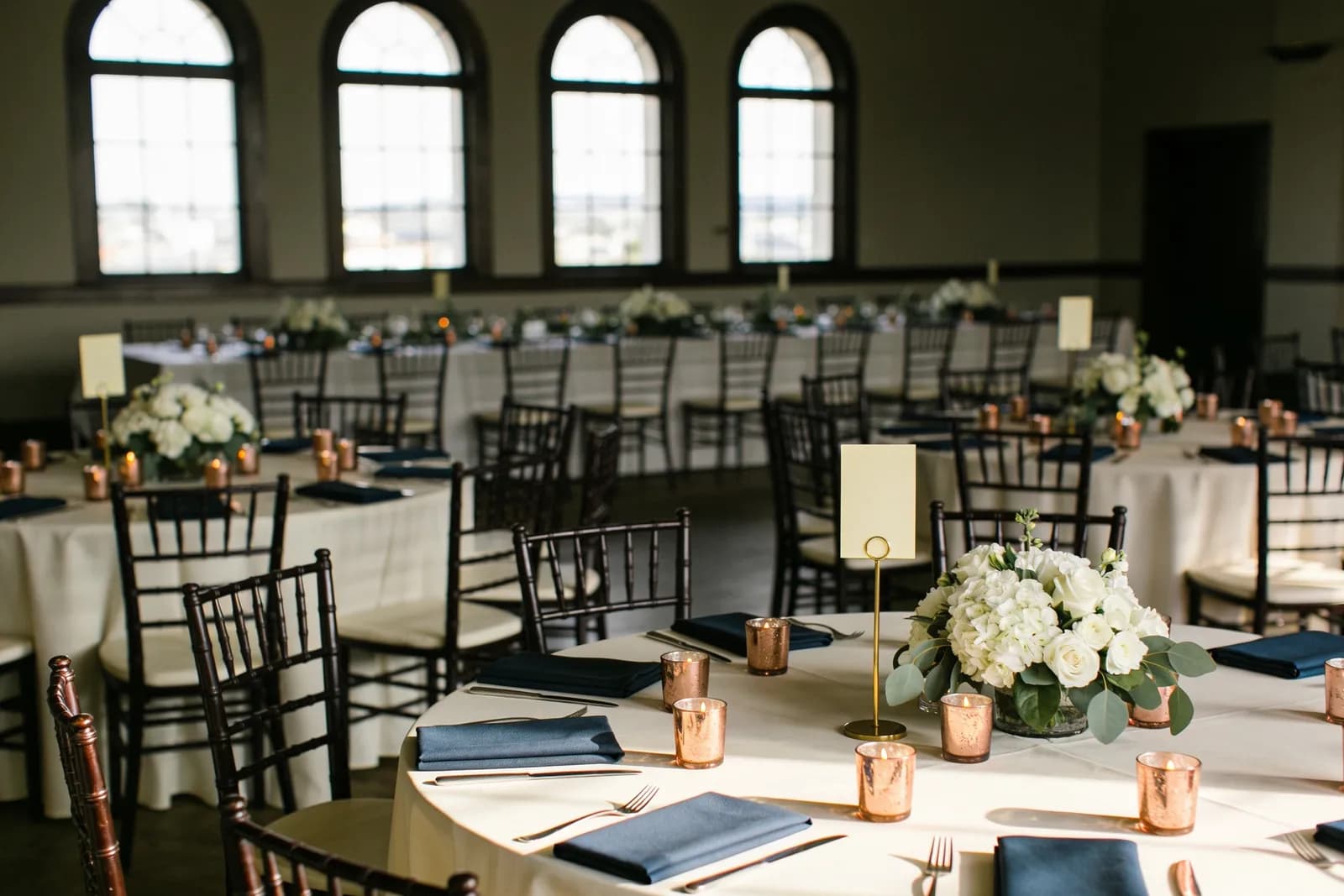
| Standard wedding round | 180 cm (6 ft) | 8-10 | 12 |
| Rectangular | 180 x 80 cm | 6 | 8 (with ends) |
| Rectangular | 240 x 80 cm | 8 | 10 (with ends) |
| Long banquet table | per running metre | about 60 cm per guest | 50 cm per guest |
These are guideline figures from venue and rental layout guides (example). At Romanian weddings the 180 cm round seating ten is the norm. Twelve gets cramped once the starter platters, glasses and flowers are on the table.
Spacing and the dance floor
Two guideline numbers:
- Between table edges, allow about 150 cm (chairs pulled out plus a lane for waiters), at least 90 cm to the walls and 120 cm for main service aisles (source). A 180 cm round with its surrounding space takes roughly 12 m².
- The dance floor needs around 0.4 m² (4.5 sq ft) per person dancing at the same time (source). American guides assume 40-50% of guests dance at once. At a Romanian wedding, the hora (the big circle dance) can bring almost the whole room onto the floor, so for 150 guests treat 30-35 m² as a sensible minimum.
Tables around the dance floor are the liveliest and loudest. Seat your dancing friends there, not the grandparents.
How to group guests
The one rule: every guest should know at least two people at their table.
- By family and circle: cousins together, university friends together, office colleagues together. A well-built guest list already has these groups.
- Couples always sit together, even couples you barely know.
- By age and energy: the relatives who want to talk, the friends who want to dance.
- Single guests: do not scatter them one per table. A cheerful table of single friends of similar age beats ten people feeling left out all night.
- Guests who know nobody (a cousin's new partner, a foreign colleague): next to whoever brought them and next to someone sociable. For foreign guests, a neighbour who speaks English makes the evening.
The children's table
Toddlers sit with their parents. For children aged roughly 6-12, a table of their own near their parents (not by the door) usually works brilliantly, especially with a children's entertainer. Tell the venue early how many children's menus you need.
Divorced parents and family feuds
- Divorced parents each get their own table, on either side of the couple's table, at equal distances. Nobody is "further back".
- New partners sit beside their parent, always.
- Relatives who have fallen out do not share a table and, ideally, are not at neighbouring ones.
- When in doubt, ask your parents. They know the family stories you do not.
Do not negotiate the plan with the whole family. Listen to your parents and nași, then decide together, just the two of you.
When to finalise it
The seating plan comes after the RSVPs:
- 2-3 months before: choose table shapes and your top table option, get the venue floor plan.
- 6-8 weeks before: send invitations with an RSVP deadline (see how online invitations with RSVP work).
- 3-4 weeks before: RSVP deadline, first draft of the plan.
- 1-2 weeks before: final numbers to the venue (check the exact deadline in your contract), final plan, printing.
- 2-3 days before: the last-minute changes that always happen.
Step by step
- Count real seats: confirmed guests including children, plus one or two spares.
- Draw the room: dance floor, band or DJ, bar, doors, toilets, your table. Then the guest tables.
- Place the fixed seats first: couple, nași, parents, grandparents.
- List your groups with headcounts (mum's side, school friends, neighbours).
- Fill tables with whole groups, not individuals. A group of twelve becomes two neighbouring tables.
- Adjust for energy: dancers by the floor, quieter guests away from the speakers.
- Check conflicts against your "not next to" list.
- Show your parents once, asking "have we forgotten anything?" rather than "do you like it?".
A wedding with 132 guests and rounds of ten: a prezidiu with the couple and two pairs of nași, two parents' tables, four family tables, five friends' tables, one colleagues' table and one children's table. Thirteen rounds plus the prezidiu make 136 seats, so two stay free and nobody sits alone.
Entrance board, table numbers and place cards
- The entrance board (planșa de intrare): above about 80 guests, list people alphabetically by surname with their table number. A1 or B1 size usually fits 150 names; check you can read it from 1.5 m.
- Table numbers or names: numbers are clearest. Names (cities you have visited, flowers, songs) are charming, but the board must still show where each one is. If you number, start next to the couple.
- Place cards are optional. Worth it for the top tables or to discreetly separate two people; elsewhere the table is enough.
All three look best in the same design as your invitation: same colours, fonts and monogram.
A hostess with the list on her phone
At the entrance, a hostess or a trusted relative (not the bride's mother, who has enough to do) greets guests and tells them their table. Easiest is a list on her phone with search by name: the guest says "Popescu", she says "table 7, by the dance floor". Last-minute changes show up instantly and she can see who has already arrived. A QR code on the entrance board linking to the floor plan helps guests who prefer to look for themselves; see our guide to QR codes at weddings.
Common mistakes
- Planning before the RSVPs. You will redo it three times.
- Tables filled to the maximum. Stay at ten on a 180 cm round.
- Grandparents next to the speakers or far from the toilets.
- Single guests scattered around the room.
- No spare seats for the cousin who turns up unannounced.
- An entrance board sorted by table rather than alphabetically, which creates a queue.
- Silent changes. Moved someone at the last minute? Tell the venue and the hostess.
Next step
Take your guest list, mark the confirmations and groups, and ask the venue for its floor plan. The rest is a puzzle you can solve in one calm evening with a cup of tea. For the bigger picture, see our wedding planning checklist.
Frequently asked questions
Draft it after your RSVP deadline, usually three to four weeks before the wedding. Final numbers and the plan go to the venue one to two weeks before, as your contract specifies. Expect small changes in the last two or three days.
The nași, the couple's wedding godparents, sit closest to the bride and groom. Traditionally that is at the prezidiu, the top table, with the godfather next to the groom and the godmother next to the bride. With a sweetheart table, they get the nearest round table.
A standard 180 cm (6 ft) round seats 8-10 comfortably and 12 at most. A 150 cm (5 ft) round seats 6-8. These are guideline figures, so check the venue's actual tables.
Give each parent their own table, on either side of the couple's table and at equal distances, with any new partner beside them. Nobody feels pushed to the back.
Avoid scattering them one per table. A table of single friends of similar age, or a seat next to someone they know and someone sociable, works far better.