Romanian wedding traditions: a complete guide for guests and couples
Godparents, two ceremonies, the hora, the bride kidnapping, money in an envelope and soup at dawn: Romanian wedding traditions explained, with tips for foreign guests.
- The nași (godparents) are the couple's witnesses, hold the candles and crowns in church and remain their spiritual parents for life.
- Romania requires a civil ceremony first; the Orthodox church service follows, with rings, crowns, a shared cup and three walks around the table.
- At the party expect the hora circle dance, a playful bride kidnapping, a midnight veil removal and cake, and dancing until 4 or 5 am.
- Guests give money in an envelope rather than presents; indicative amounts for a friend are around 500-1,000 lei (about €100-200).
- Traditions vary by region: the wedding fir tree in the south and west, the wedding speech in Moldavia, folk costume in Maramureș.
A Romanian wedding is a long, generous celebration built around a few traditions that survive almost everywhere: the godparents (nașii), a civil ceremony followed by an Orthodox church service, collecting the bride from her home, the hora circle dance, the playful «bride kidnapping», a gift of money in an envelope, the cake at midnight and a sour soup at dawn.
This guide explains each one in the order it happens, what it means, what Romanian couples still do today and, at the end, exactly what to expect if you are a foreign guest or marrying into a Romanian family. We are the Celebrum team; we have helped plan many Romanian weddings, from 400-guest parties in Moldavia to 40-person courtyard weddings in Transylvania, and we wrote this for the person who has just been told «you'll love it, it goes on until morning».
Before the wedding: the proposal, the families and the godparents
The proposal and «pețitul»
Traditionally, the groom's family paid a formal visit to the bride's parents to ask for her hand (pețitul), sometimes with a well-spoken matchmaker who did the talking. Dowry was discussed, hands were shaken and an engagement followed. Today the proposal is usually private, and pețitul has become a dinner where both families meet and talk about the date, the budget and, inevitably, the guest list. Many grooms still ask the bride's father for his blessing as a courtesy. It goes down very well.
Nașii: the godparents of the marriage
If there is one Romanian wedding tradition you need to understand, it is the nași. They are usually a married couple chosen by the bride and groom, and they are far more than witnesses:
- they sign as witnesses at the civil ceremony;
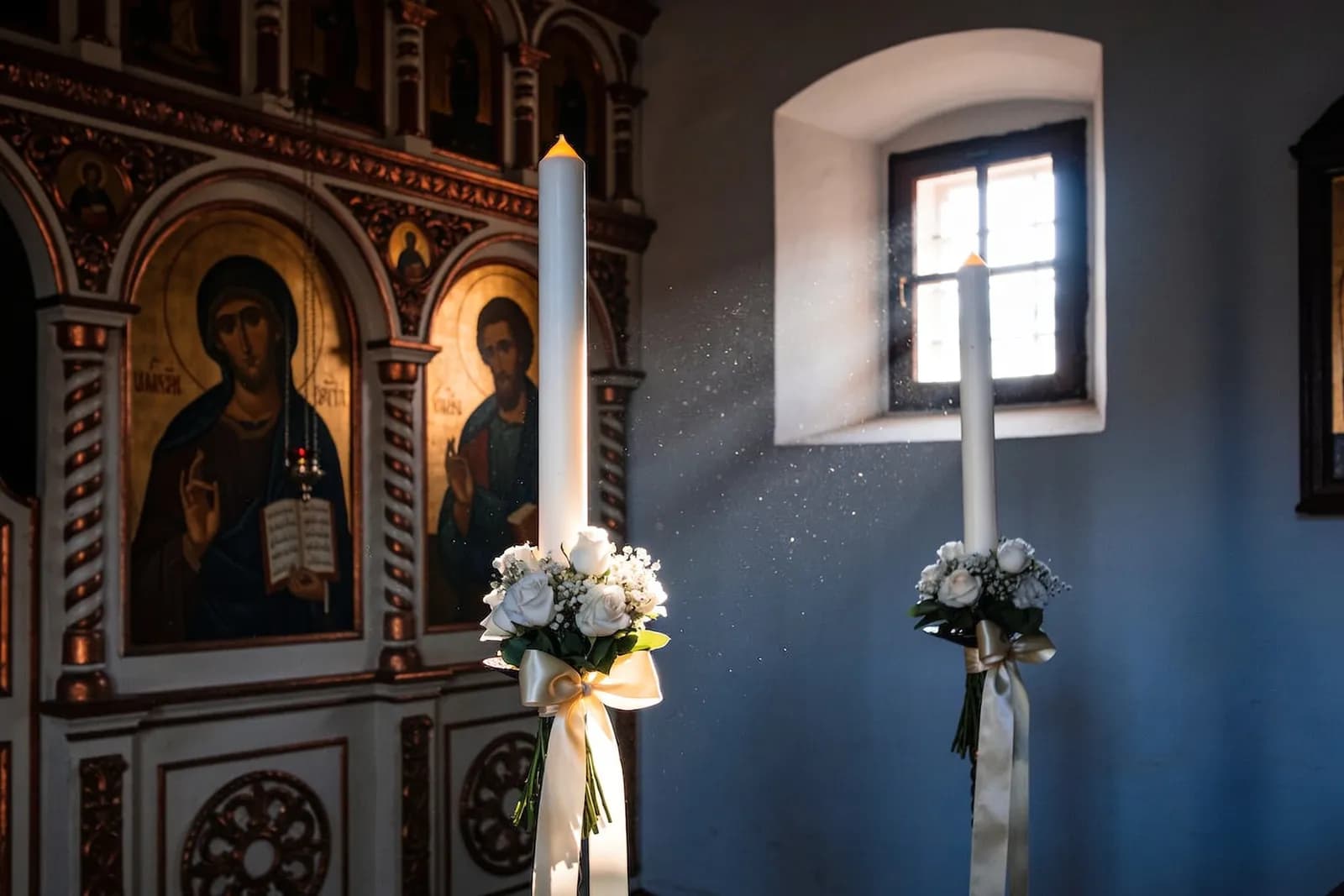
- in church, they hold the tall decorated candles and the crowns during the service;
- at the party they sit at or next to the couple's table, lead the hora and «buy back» the bride if she is kidnapped;
- at midnight the godmother removes the bride's veil;
- they give the largest gift of the night and often cover a part of the costs.
Afterwards, the nași remain the couple's spiritual parents. They are often asked to baptise the couple's first child, and they are invited to every important family moment for decades. Being asked to be someone's naș is a real honour, and a long-term commitment.
Two ceremonies: civil and church
In Romania, the only legally valid marriage is the one at the registry office (starea civilă). Under the Romanian Civil Code, article 259(3), the religious ceremony may only take place after the civil one. Couples either do the civil ceremony a few days or weeks earlier with close family, or on the morning of the wedding day, sometimes at the venue if the town hall allows it. If one of you is not Romanian, see our guide to civil marriage in Romania for the paperwork.
The Orthodox church ceremony has its own calendar: no church weddings during the four fasting seasons, Bright Week, major feasts or, as a rule, on Wednesdays and Fridays. Our Orthodox wedding calendar for 2027 lists every date.
| Civil ceremony | Church ceremony | |
|---|---|---|
| Where | town hall, or an approved venue where allowed | the parish church, or another with the priest's agreement |
| Legally binding | yes, the only one recognised by the state | no, religious only |
| Witnesses | the nași (or two witnesses) | the nași hold the candles and crowns |
| When | any day the town hall officiates | according to the church calendar |
| Length | 10-20 minutes | roughly 45-60 minutes |
The wedding morning
Getting the bride ready
The bride gets ready at home (or, increasingly, at a hotel) with her mother, the godmother and close friends. In villages, women once sang special songs while dressing her, because the morning was also her farewell to her parents' home. Today it is a favourite moment for the photographer: the dress, the veil, sometimes a letter from the groom.
The wedding fir tree
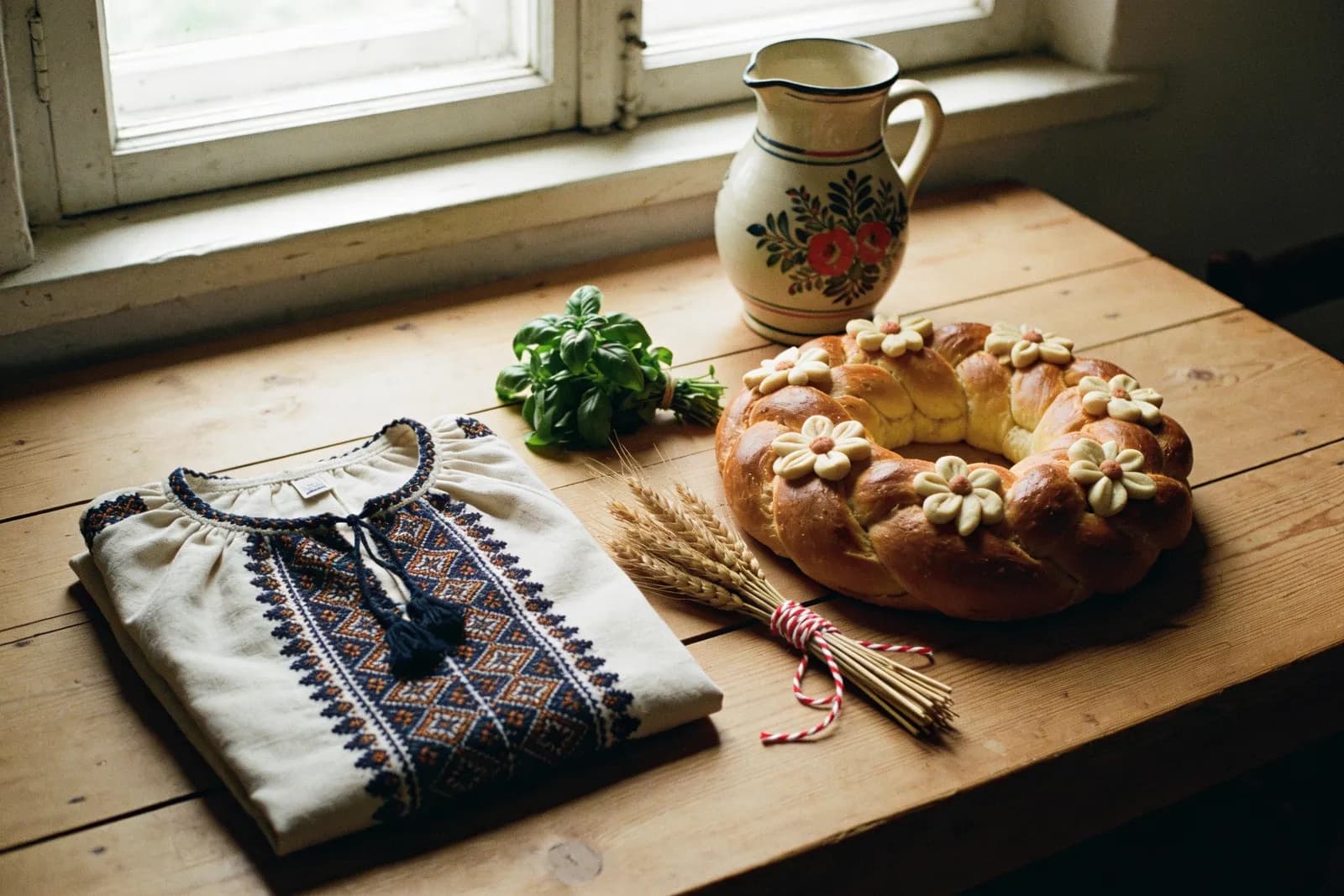
In Oltenia, Muntenia and Banat, especially in villages, you may see the wedding fir tree (bradul de nuntă): a small fir or tree decorated with ribbons, flowers and bells, carried in the procession or placed in the bride's yard. Evergreen, it stands for long life and youth. In many villages the groom's brother has to guard it all day; if the guests manage to steal it, he has to buy it back (spotmedia.ro).
Collecting the bride
The groom sets off with his party (parents, friends, sometimes musicians) to collect the bride. At her door, her friends or siblings block the way and ask for a «ransom»: money, a dance, a promise or a silly challenge. Her father then hands her over, and the procession heads to the nași and on to church. In cities this has shrunk to a short visit with the photographer and a glass of champagne, but families love it.
Inside the church: the Orthodox wedding service
The Orthodox service has two parts, the betrothal and the crowning (full text of the service, ROEA). As a guest you simply stand (there are often few or no pews) and watch:
- The rings. The priest blesses them and places them on the couple's fingers; the godfather swaps them three times.
- The candles. The nași hold the lit candles throughout.
- The crowns. The priest places two crowns on the couple's heads, a sign of honour and of responsibility for the new family. The nași hold them above the couple's heads.
- The common cup. The couple take turns drinking wine from the same cup: from now on they share joy and hardship.
- Walking around the table. The priest leads the couple three times around the table in the middle of the church while the choir sings «Isaiah, dance». It is their first walk together as a married couple.
On the way out, guests shower the couple with wheat or rice, petals and coins for abundance and luck. Some churches no longer allow rice on their steps, so follow what the family does.
The party: hora, the «kidnapping», the gift and the cake
Welcome and the hora
At the venue, parents often greet the couple with bread and salt, then the couple share their first dance. Soon after, or between courses, comes the hora: everyone joins hands in a huge circle around the couple and the nași and steps to the music. You do not need to know the steps. Hold hands, watch the person next to you and follow the circle. Other folk dances (sârba, brâul) follow, depending on the region.
The bride kidnapping
Halfway through the night, friends «kidnap» the bride and take her to a nearby bar or a corner of the venue. The groom and the godfather must buy her back with drinks, a song, a dance or money. It is all a game; many couples keep it short (30-40 minutes) or replace it with a quick challenge for the nași.
The gift (darul)
Romanian guests give money in an envelope, not presents from a registry. Envelopes go in a box at the entrance or are handed to the couple at their table towards the end of the night. In some villages in Moldavia and Oltenia, the gift is still announced out loud (strigarea darului). How much? It depends on the city, the venue and how close you are. As an indicative reference, Romanian gift calculators such as catdam.ro suggest around 500-1,000 lei for a friend (roughly €100-200); our full guide on how much to give at a Romanian wedding goes into detail.
Midnight: the veil, the bouquet and the cake
Around midnight the godmother removes the bride's veil and, in some regions, ties a headscarf on her, a sign that she is now a married woman. The bride throws her bouquet, and the cake is cut, usually with indoor sparklers and the whole room gathered round.
Ciorbă de potroace at dawn
Towards morning, after a night of dancing, waiters bring ciorbă de potroace, a sour soup made with chicken giblets and borș (fermented bran). It exists to revive tired guests, and it is the tradition couples drop least often (bzi.ro). Some families serve it the next day at a smaller lunch.
Regional differences
| Region | What stands out |
|---|---|
| Moldavia (north-east) | large weddings, the wedding speech (orația) recited by a master of ceremonies, a flask of wine (plosca), potroace at dawn, sometimes the gift announced aloud |
| Transylvania | heralds who invite guests house to house, the bride's dance, Saxon and Hungarian influences, generous food |
| Oltenia and Muntenia (south) | the wedding fir tree and flag, musicians who follow the procession all day |
| Banat (west) | the decorated tree in the bride's yard, druște and druști (bridesmaids and groomsmen), Banat folk music |
| Maramureș (north) | traditional costume worn at the wedding, a procession through the village, heralds with a wine flask, village weddings that can last two days |
What to expect as a foreign guest
If you have been invited to a Romanian wedding, or you are marrying a Romanian and your family is flying in, here is the honest picture.
The timeline
| Time (indicative) | What happens |
|---|---|
| Morning or earlier in the week | civil ceremony, usually with close family only |
| Around 12:00-15:00 | collecting the bride, photos |
| Around 15:00-17:00 | church ceremony (about an hour) |
| Around 19:00-20:00 | arrival at the venue, welcome drinks |
| 20:00-midnight | starters, fish course, sarmale (cabbage rolls), dancing between courses, the hora |
| Around midnight | veil removal, bouquet, cake |
| 01:00-02:00 | main course (yes, really) |
| 04:00-06:00 | ciorbă de potroace, last dances |
Pace yourself. There will be four or five courses, the party usually lasts until 4 or 5 am, and nobody expects you to stay until the very end. Leaving after the cake is perfectly polite.
The gift
Bring cash in an envelope with a short card. Gifts from a list are rare, and a boxed present may be awkward to carry home for the couple. If you travel from abroad, cash in lei or euro are both fine; the couple will not mind.
Dress code
Think smart cocktail to formal: a suit for men, a dress or elegant outfit for women. Avoid white (it is the bride's colour) and anything very revealing for the church, where covered shoulders are appreciated. Bring comfortable shoes for the hora, and a light layer if the church is old and cool.
in church there may be nowhere to sit, and services can last an hour. Stand near the back if you need to step out, and do not worry if you do not know when to cross yourself; nobody is watching you.
Language and toasts
Older relatives may not speak English, but they will try to feed you and pour you a glass of țuică (plum brandy). «Noroc!» (cheers) and «Casă de piatră!» (literally «a house of stone», the classic wish for a lasting marriage) will make you instantly popular.
Planning a bilingual Romanian wedding
If half your guests are Romanian and half are not, explain the day in advance: what the nași do, why the party lasts until dawn, how the envelope works. Seating mixed families thoughtfully helps too; our wedding seating plan guide has practical rules.
On your Celebrum wedding site you can publish the day's schedule, the church and venue locations and your story, and every guest replies from their own personal link.
Frequently asked questions
The party usually starts around 19:00-20:00 and lasts until 4 or 5 am, after a church ceremony in the afternoon. In villages, celebrations can stretch over two days. Guests are free to leave after the cake at midnight.
Guests give money in an envelope, usually handed to the couple at their table or left in a box at the venue. Amounts depend on the city, the venue and how close you are to the couple; indicative figures for a friend are around 500-1,000 lei (about €100-200).
Nași are the godparents of the marriage, usually a married couple. They act as witnesses, hold the candles and crowns in church, lead key moments at the party and remain the couple's spiritual parents, often baptising their first child.
Smart cocktail to formal: a suit for men and an elegant dress or outfit for women. Avoid white, keep shoulders covered in church and bring comfortable shoes for the hora.
It is a game in which friends take the bride away during the party and the groom and godfather must buy her back with drinks, a song, a dance or money. It is light-hearted, optional and usually lasts under an hour.
Yes. The civil ceremony at the registry office is the legal marriage and must come first; the Orthodox church ceremony is religious. They can be on the same day or weeks apart.